

Feeding your dog is one of the most important parts of pet care. The right food keeps their body healthy, their coat shiny, and their barks happy. But knowing exactly what and how much to feed can be confusing, especially with so much information out there.
That is why we have put together this Ideal dog feeding guide, covering 10 essential tips every pet parent should know.

1. How often should I feed my puppy?
Puppies are bundles of energy and need small, frequent meals to support their fast growth.
- Feed 3-4 meals per day until about 6 months of age
- After 6 months, gradually reduce to 2 meals per day
- Stick to a routine so your pup learns when to expect food
- Always choose food specially formulated for puppies, such as Ideal Puppy
2. When should I switch my dog from puppy food to adult food?
The timing depends on your dog’s size and breed:
- Small and medium breeds: around 12 months
- Large and giant breeds: 18-24 months
Switching too early can deprive your dog of key nutrients, while switching too late can lead to unnecessary weight gain. If you are unsure, check with your vet before making the change.
3. How do I know if my dog is overweight or underweight?
A healthy body condition looks like this:
- Visible waist when viewed from above
- Gentle upward tuck in the belly from the side
- Ribs that can be felt without pressing too hard
If ribs stick out, your dog may be underweight. If you cannot feel them at all, your dog may be overweight.
4. Can dogs eat grains?
Yes, grains are not harmful for most dogs. They are a good source of energy and fibre. Unless your dog has a diagnosed allergy (which is rare), you do not need to avoid grains. Foods like Ideal Adult are carefully balanced with grains and animal protein to support long-term health.
5. Are dog supplements necessary?
If you feed a high-quality commercial food like Ideal, supplements are usually unnecessary. Adding extra vitamins or minerals without guidance can cause imbalances. Only give supplements if:
- Recommended by your vet
- Prescribed for a specific health condition
6. What is the best way to measure portions?
Start with the feeding guide on your Ideal food bag. Then:
- Adjust portions according to activity levels
- Check body condition regularly
- Weigh your dog monthly to avoid creeping weight gain
Dogs that are active farm workers or jogging partners may need more, while couch-loving companions may need less.
7. How much protein should be in dry dog food?
Protein is essential for muscle strength and overall health.
- Adult dogs: at least 18% protein
- Puppies: at least 22% protein
- Look for animal proteins (chicken, beef, pork) that are easier for dogs to digest
Ideal includes real meaty goodness, so your dog enjoys every bite while getting the fuel they need.
8. How much fat should be in dry dog food?
Fat is more than just energy, it supports a glossy coat and healthy skin.
- Adult dogs do best on 5-12% fat
- Less active dogs should be fed on the lower end of that range
- Overfeeding fat can quickly lead to weight gain
9. What not to feed your dog
Some foods are unsafe, even toxic. Avoid:
- Chocolate
- Grapes and raisins
- Onions and garlic
- Macadamia nuts
- Cooked bones
Scraps from the table can also upset digestion and encourage begging. Treats are fine, but they should make up less than 10% of daily intake.
See the full list of foods harmful to dogs from Four Paws.
10. How to change your dog’s food safely
Changing food too quickly can upset your dog’s tummy. A safe transition takes 7-10 days:
- Mix a small amount of the new food with the old food
- Gradually increase the new food each day
- By day 7–10, your dog should be fully switched over
If moving from wet to dry food, expect your dog to drink more water and chew more. If moving from dry to wet, the larger-looking portions can be misleading because wet food is less calorie-dense.
Extra dog feeding tips to keep in mind
- Breed, size, age, lifestyle, and health all affect how much your dog should eat
- Feeding guidelines on your Ideal packaging are a good starting point
- Treats should never exceed 10% of daily intake
- Transition slowly when changing diets to protect digestion
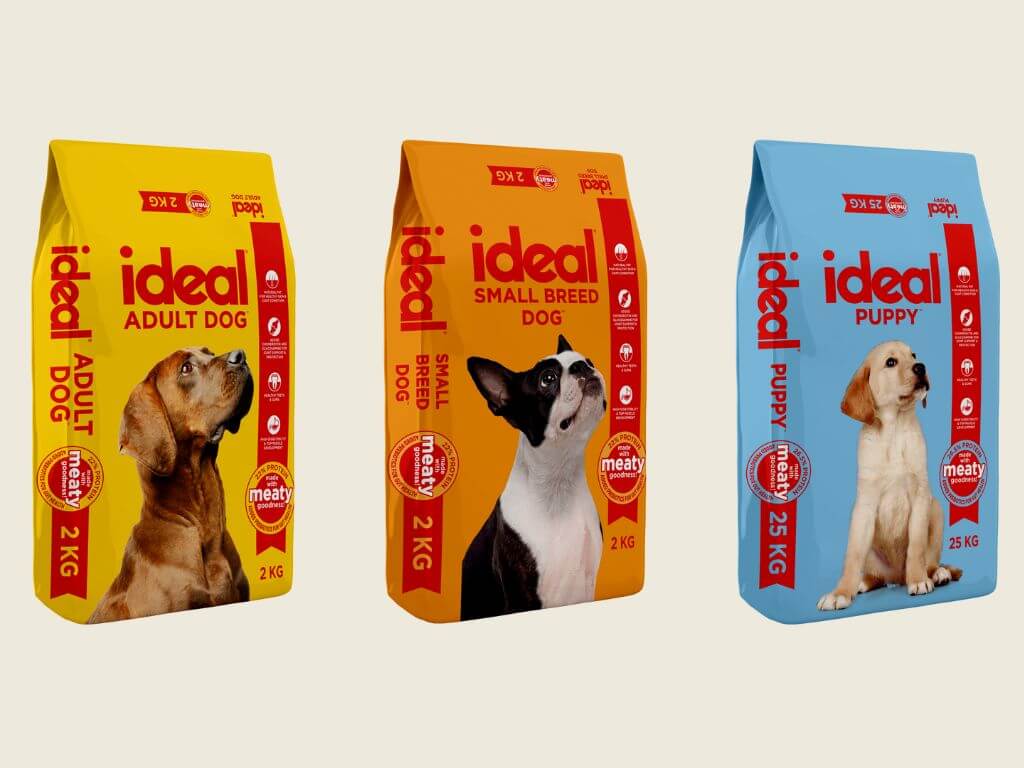
Feeding your dog correctly helps them thrive from puppyhood through their golden years. With Ideal’s range of balanced dog foods, you know every meal supports their health and happiness.
Explore the full Ideal range and follow us on Facebook and Instagram for more helpful dog feeding tips and pet care advice.